Celebrating the writers, storytellers, poets, and books that enrich the Upper East Side of Texas.
Literary
Book Review
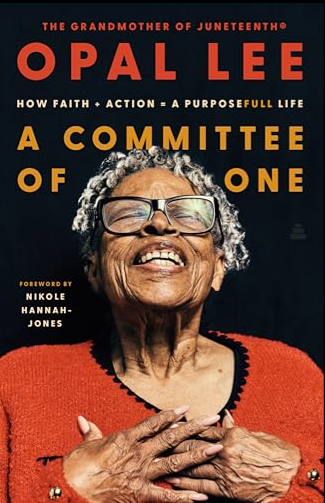
The Grandmother of Juneteenth
Opal Lee, A Committee of One
How Faith + Action = A PurposeFULL Life
By Opal Lee, with Tracey Michae’l Lewis-Giggetts
Foreword by Nikole Hannah-Jones, Pulitzer Prize Winner/1619 Project
There are memoirs that recount a life, and there are memoirs that invite readers to live with greater purpose. A Committee of One: How Faith + Action = A PurposeFULL Life accomplishes both.
Published as Marshall, Texas, native Opal Lee celebrates her 100th birthday, this deeply personal memoir offers something more than the familiar story of the woman known around the world as the “Grandmother of Juneteenth.” It reveals the principles that shaped her remarkable life: unwavering faith, quiet perseverance, compassion for others, and the conviction that one person truly can make a difference.
Many readers know Opal Lee for her campaign to make Juneteenth a federal holiday. They know about the hundreds of miles she walked to bring national attention to the cause and the historic day in 2021 when she stood beside President Joe Biden as he signed the legislation into law.
But A Committee of One reminds us that those accomplishments were the culmination of decades spent serving her community long before the cameras arrived.
Lee reflects on a life marked by both hardship and hope. She writes candidly about childhood trauma, including the racist attack that destroyed her family’s home in Fort Worth, personal disappointments, and the many challenges she faced as an educator, mother, and community leader. Yet these experiences never become stories of bitterness. Instead, each chapter becomes a lesson in resilience, forgiveness, and purpose.
The book is organized around practical life lessons rather than a strictly chronological biography. Lee encourages readers to serve where they are, care for their neighbors, remain steadfast during adversity, and recognize that meaningful change often begins with one individual willing to act. The title itself captures her philosophy: sometimes the most effective committee is simply one person who refuses to give up.
During their interviews, Tracey Michae’l Lewis-Giggetts, a New York Times bestselling author and experienced literary collaborator, skillfully helps preserve Opal Lee’s conversational warmth. Reading the book feels much like sitting across the table from Ms. Opal herself, listening as she shares stories, laughs gently at life’s surprises, and offers wisdom earned through a century of experience. Her words never feel preachy or self-congratulatory. Instead, they reflect humility and gratitude, qualities that have long defined her public life.
Nikole Hannah-Jones’ foreword provides thoughtful context, placing Lee’s achievements within the broader story of American history while celebrating the extraordinary impact of one determined citizen. Hannah-Jones is the Pulitzer Prize-winning creator of The 1619 Project and a staff writer for The New York Times Magazine. The forward serves as an appropriate introduction to a memoir centered not on fame, but on faithful service.
Perhaps the greatest strength of A Committee of One is that it challenges readers to ask themselves a simple question: What can I do? Opal Lee never suggests that changing the world requires wealth, power, or political influence. Instead, she demonstrates that lasting change begins with consistency, kindness and the courage to keep walking, even when the destination seems impossibly far away.
In an era often defined by division and discouragement, Opal Lee offers a refreshing reminder that hope is not passive. Hope is action. Hope is service. Hope is believing that one person, guided by faith and purpose, can inspire a nation.
A Committee of One is more than a memoir; it is a guide for purposeful living. Readers will come away inspired not only by Opal Lee’s extraordinary journey, but also by the realization that each of us has the ability, and the responsibility, to leave our own community better than we found it.