
Person of the Region
Shelley Brookins
A Reason to Bee Happy
By Sharon Harper
There are moments at Bee Happy that founder Shelley Brookins measures differently than most people might. A first job. A new friendship. Someone finding the confidence to speak up. A belly laugh from someone she has known for years but has never heard laugh quite like that before.
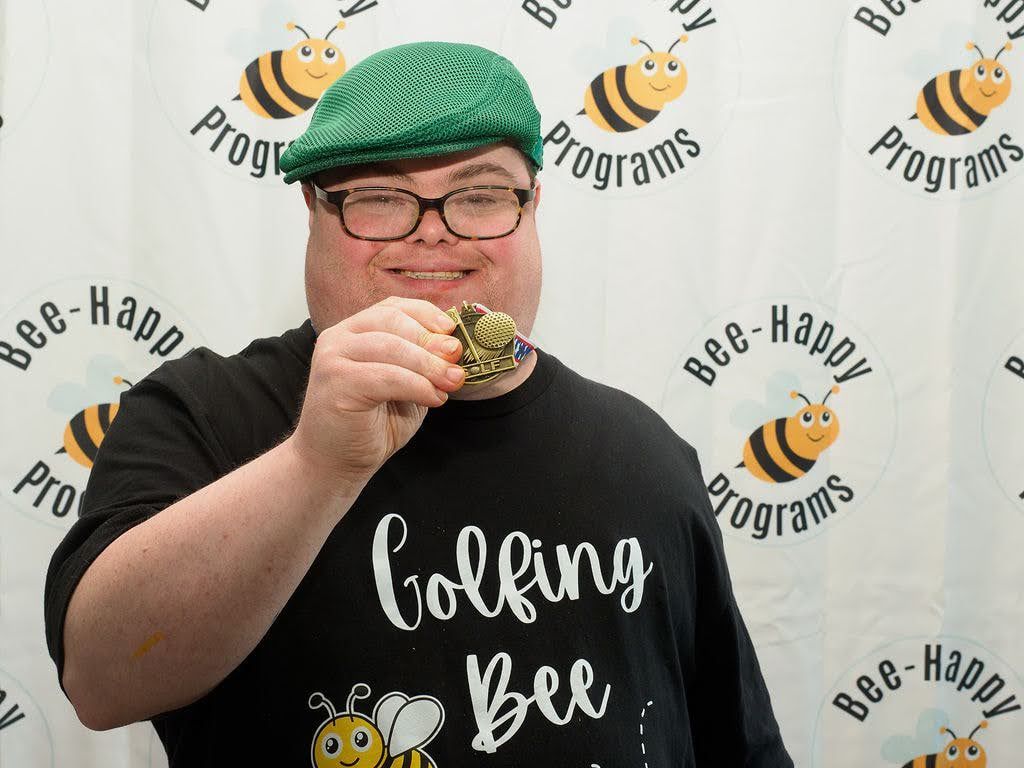
At Bee Happy, a Kaufman nonprofit serving adults with intellectual and developmental disabilities, those moments are signs of something bigger: belonging, independence and the chance to be part of a community.
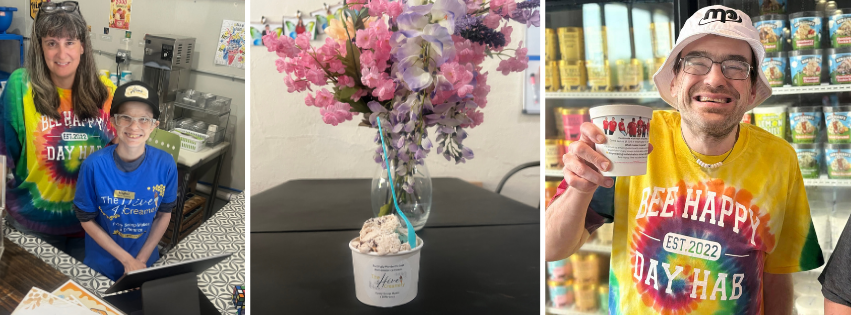
That mission extends into historic downtown Kaufman through The Hive Creamery, an ice cream shop created by Bee Happy to provide opportunities for adults with special needs to work, volunteer and interact with the community.
The night before The Hive opens, Brookins gathers the families and employees for a practice run. Katrina, a woman in her 40s, is preparing to begin her first job. Overcome by the moment, she starts to cry.
“Thank you,” she tells Brookins. “Thank you for giving me this job. Thank you for giving me this place.”
Brookins still remembers what those words do to her. For many people, she says, getting a job is simply getting another job. For Katrina, it is a first.
“That’s success to me,” Brookins says.
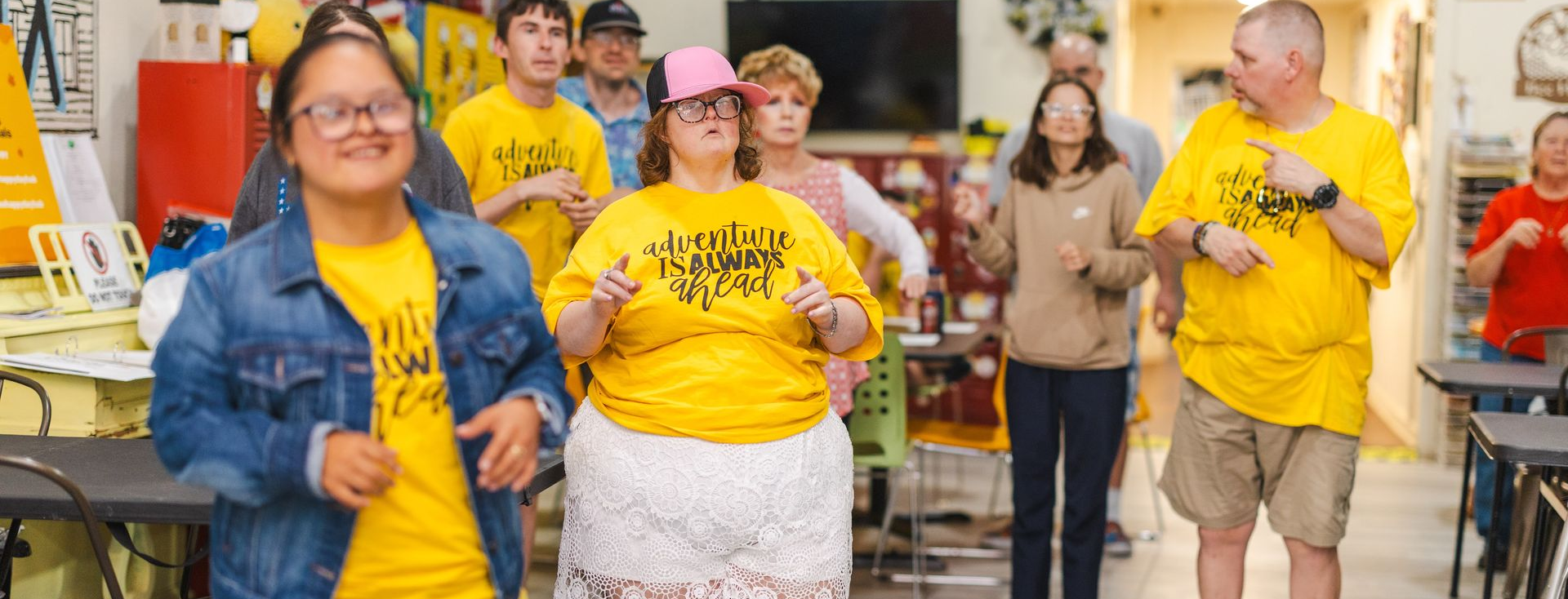
It is the kind of success Brookins never imagined she would be measuring. What begins when she discovers a need she never knew existed grows into the Bee Happy Day Program, where adults with intellectual and developmental disabilities find friendship, activities, personal growth and pre-vocational training.
The Hive becomes another piece of that mission, taking those opportunities beyond the day program and into the heart of the community.
None of it is the life Brookins originally plans for herself. It begins with a man named Richie.
Richie is 36 and has intellectual and developmental disabilities when Brookins and her family are asked to take him to church. As they get to know him, he talks about wanting to attend a day program.
Brookins starts making calls. What she discovers changes the direction of her life.
There is no local program that meets Richie’s needs, she says, and his access to state-supported services is still years away. As Brookins digs deeper, she begins asking a larger question: What happens to adults with developmental disabilities in communities after they leave the public school system?
For many families, she learns, the answer is not much. Parents may leave jobs to stay home. Adults who spent years developing social and life skills in school can suddenly find themselves isolated, without the same opportunities to interact with friends or participate in their communities.
“I was going on with my life, working on my master’s in counseling,” Brookins says. “And I felt the calling to be a solution to his problem.”
She begins talking to people throughout the community, asking if they understand what happens when these young adults age out of school services. She researches. She raises money. A nonprofit is formed. In 2022, Bee Happy opens its doors. At first, Brookins sometimes wonders why she is the person doing it. She is not a retired special education teacher. She does not have a child with special needs. Her plan is to earn a master’s degree in counseling and eventually counsel women.
“I can remember walking with my daughter and being like, ‘I don’t know why I was chosen for this,’”
she says. “I couldn’t sleep. It literally was a calling on my life.”
Then life provides an answer she never expects. Brookins’ second granddaughter, Delilah, is born with Down syndrome.
The mission that begins with Richie suddenly becomes deeply personal. “Okay, now Nana’s on the case,” Brookins remembers thinking.
Bee Happy is still for Richie and all the adults and families Brookins has come to know. But now it is also about Delilah’s future. “It got my voice louder,” she says.
Bee Happy is still for Richie and all the adults and families Brookins has come to know. But now it is also about Delilah’s future. “It got my voice louder,” she says.
Looking backward, Brookins can see pieces of her life that seem to have prepared her for work she never anticipates doing.
She finishes that master’s degree in counseling. Although she does not practice in the way she once envisioned, the training comes into play every day as she works with individuals and their families. Years spent in corporate management and logistics prove useful as Bee Happy grows. Even raising six children provides its own kind of preparation.
She laughs about being a “chaos coordinator” both at home and at Bee Happy. Mostly, though, Brookins is an encourager. Instead of beginning with what someone cannot do, she and the Bee Happy staff ask another question: How can they?
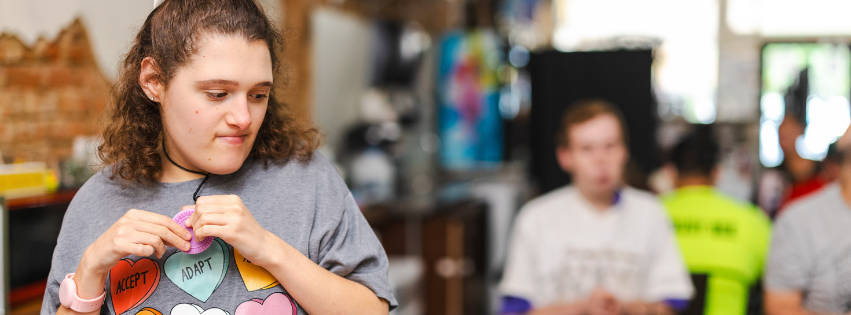
Participants take karate. They go skiing. They develop friendships and learn new skills. Staff members talk to them about goals and dreams, then look for ways to make those dreams possible. “What has surprised me the most is the growth we’re seeing in our individuals as we empower them and as we take down the walls that the world has put on them,” Brookins says.
Sometimes that growth is obvious. Sometimes it takes years.
One participant arrives quiet and reserved and gradually becomes far more vocal. His mother jokingly blames Bee Happy for teaching her son to be loud.
Another man has been with the program for about three and a half years when Brookins hears something new one day—a full belly laugh.
For someone else, it might be an ordinary sound. For Brookins, it is a milestone. “That was a huge success,” she says.
As the day program grows, Brookins begins noticing something else. Many of the adults want to work, but opportunities are limited. So she starts thinking again.
Bee Happy’s day program closes at 3 p.m. What if the same space could become something else afterward? Something Kaufman needs. Something that could create jobs while bringing people from the community through the doors.
The answer is ice cream. The Hive Creamery is born.
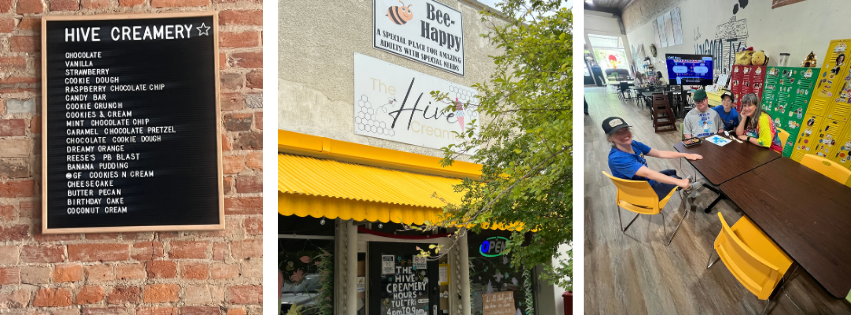
Brookins does not want to simply serve packaged ice cream. If they are going to do it, she wants it to be good. They learn to make homemade ice cream on site, and The Hive becomes both a sweet stop in Kaufman and a public-facing extension of Bee Happy’s mission.
The creamery provides employment and volunteer opportunities for adults with special needs, including people receiving their first paychecks.
There is Gunner, whose famously generous servings become known around the shop as the “Gunner scoop.” There is Katrina, happily working the register and serving customers after waiting decades for her first job.
Brookins’ favorite flavor is banana pudding, originally planned as a seasonal offering until customers make it clear it needs a permanent spot on the menu.
Yet the most important thing served at The Hive may have little to do with ice cream.
It is visibility. Customers walk through the door because they search online for ice cream. Then they notice the photographs on the walls. They meet the people working behind the counter. They learn why the creamery exists.
“They walk in and they’re like, ‘Oh, this is more than that,’” Brookins says.
For visitors, The Hive is also one more reason to linger in historic downtown Kaufman. The Kaufman County seat has the kind of courthouse square that invites a slower pace, with local shops, restaurants and small-town character surrounding the heart of the community. A stop for a scoop of homemade ice cream fits easily into an afternoon spent exploring downtown, but a visit to The Hive comes with something extra. Travelers may walk through the door looking for a sweet treat and leave knowing a little more about the people who call Kaufman home.
That interaction matters because Brookins believes adults with developmental disabilities are too often forgotten once they reach adulthood. Communities rally around children. Services, programs and advocacy are often built with children in mind. But children with developmental disabilities grow up.
“They’re not kids anymore,” Brookins says. “But they still have the same needs.”
Those needs can become more frightening as parents age. Brookins hears the worry from families: Who will care for my son or daughter when I no longer can?
It is one reason her vision has grown again. The long-term goal is Bee Love Villages, an affordable, safe housing community designed to provide adults with developmental disabilities greater independence while giving families confidence that their loved ones are surrounded by people who know and care about them.
The idea comes, as so many of Brookins’ ideas do, after encountering another problem. When an individual loses his housing, she tries to find an affordable and appropriate place for him to go.
The options are painfully limited. “So I’m like, what do we do?” she says. Her answer is to start imagining what does not yet exist. It is the same approach that led to Bee Happy and The Hive.
Brookins also hopes to bring the model to Forney, where she says the need is already evident. But she does not envision building enormous centers where families drive long distances for services. She wants programs rooted in their communities, where participants shop, work and see people they know.
In Kaufman, Gunner can walk around town and people recognize him.
“Gunner is Mr. Popular,” Brookins says with a laugh. That is the point. Belonging is not simply having somewhere to go during the day. It is being known.
The work is not easy. Bee Happy depends heavily on volunteers and fundraising. Brookins estimates eight to 10 volunteers regularly assist with programs, training and fundraising efforts. And there are days when the weight of keeping everything moving feels enormous.
Has she ever thought about quitting? “All the time,” she admits.
But then she looks at the photographs hanging inside The Hive. She sees the faces of the people depending on the mission. She watches an employee proudly serve a customer. Someone accomplishes something that once seemed out of reach. And she keeps going.
Brookins hopes her story encourages communities to support organizations serving adults with developmental disabilities. She hopes younger generations grow up understanding inclusion so they become employers, community leaders and voters who recognize the needs of this population.
But she also hopes there is something more personal in her story for anyone who has felt called toward something for which they did not feel qualified.
“If she can do it, so can I,” is what Brookins hopes someone thinks after hearing her story.
She did not begin Bee Happy because she had all the answers. She began because Richie needed somewhere to go.
Ask Brookins what brings her joy, and for a moment she struggles with the answer. Then it comes. Seeing other people happy.
A customer who loves the mission. An adult proud of the work they have done. One of her children having a good day. Someone walking through the doors and realizing they have found a place where they belong.
Maybe, after all, the name says it best. Bee Happy.